
Portuguese Custard Tarts (Pastéis de Nata)
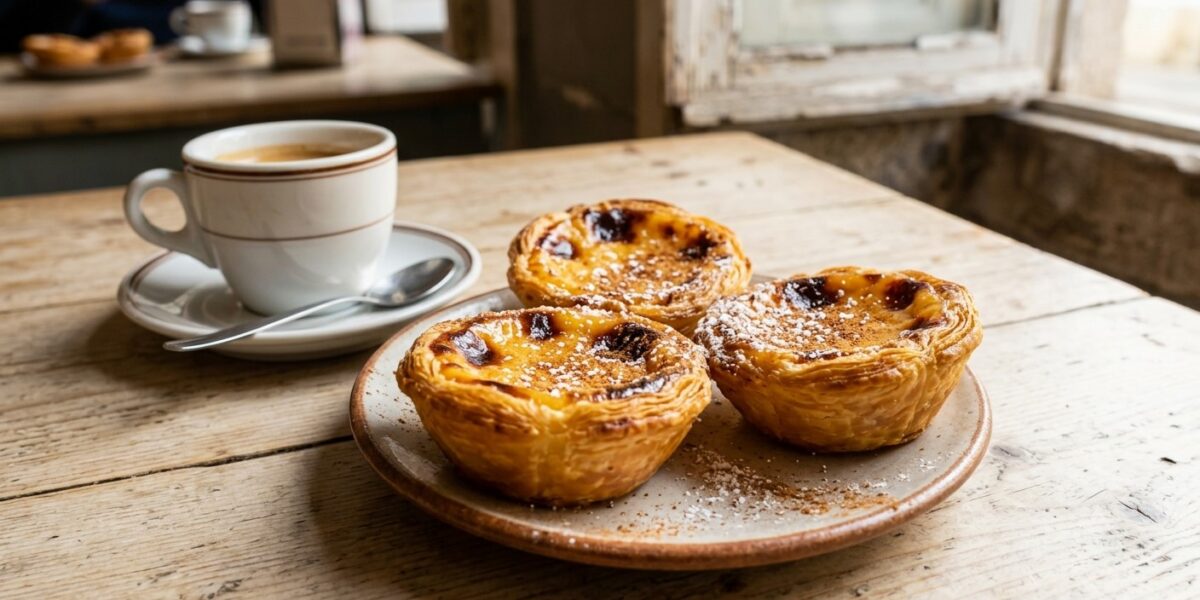
These iconic Portuguese custard tarts feature a flaky, buttery pastry shell filled with a rich, creamy custard and caramelized, blistered tops. A truly delightful sweet treat perfect with coffee.
Instructions
- To make the dough: In a large bowl, combine 1 cup all-purpose flour and ¼ teaspoon kosher salt. Gradually add ⅓ cup cold water, mixing until a shaggy dough forms. Turn out onto a lightly floured surface and knead for 5-7 minutes until smooth and elastic. Cover with plastic wrap and let rest for 15 minutes.
- Prepare the butter block: On a piece of parchment paper, spread 2 tablespoons of the softened butter into a rectangle about 4x6 inches. Place in the refrigerator to chill slightly while you prepare the dough for lamination.
- Laminate the dough: On a lightly floured surface, roll the dough into a rectangle about 8x12 inches. Spread the remaining softened butter over the middle two-thirds of the dough, leaving the top third bare. Fold the unbuttered top third down over the middle, then fold the bottom third (with butter) up over the folded dough, like a letter. Rotate the dough 90 degrees, gently roll it out again to an 8x12 inch rectangle, and repeat the folding process. Wrap tightly in plastic wrap and chill for 30 minutes. Repeat the rolling, folding, and chilling process one more time for a total of two folds.
- Prepare the sugar syrup: In a small saucepan, combine ¾ cup white sugar, ¼ cup plus 1 tablespoon water, the cinnamon stick (if using), and lemon zest (if using). Bring to a boil over medium-high heat, then reduce heat and simmer for 3-5 minutes, until the syrup thickens slightly (do not stir after boiling). Remove from heat and discard cinnamon stick and lemon zest.
- Make the custard base: In a separate medium saucepan, whisk together ⅓ cup all-purpose flour and ¼ teaspoon kosher salt. Gradually whisk in about ¼ cup of the milk to form a smooth paste, then slowly whisk in the remaining 1 ¼ cups milk. Cook over medium heat, whisking constantly, until the mixture thickens significantly and coats the back of a spoon, about 5-7 minutes. Remove from heat.
- Temper the egg yolks: In a small bowl, whisk the 6 egg yolks. Slowly drizzle about ½ cup of the hot milk mixture into the egg yolks, whisking constantly, to temper them. Then, gradually add the tempered egg yolks back into the main milk mixture in the saucepan, whisking vigorously to combine.
- Combine custard and syrup: Slowly pour the hot sugar syrup into the custard base, whisking constantly until fully incorporated. Stir in the vanilla extract. Strain the custard through a fine-mesh sieve into a clean bowl to ensure a silky-smooth texture. Set aside to cool slightly.
- Preheat oven and prepare molds: Preheat your oven to its highest setting (usually 250°C/475°F or 260°C/500°F). Lightly grease a 12-cup muffin tin or individual tart molds.
- Assemble the tarts: On a lightly floured surface, roll out the chilled dough very thinly into a rectangle about 12x18 inches. Tightly roll the dough along the longer side into a log. Slice the log into 12 equal pieces. Place each piece cut-side up into a prepared muffin tin cup. Using your thumbs, press the dough from the center outwards to form a thin shell that lines the entire cup, extending slightly above the rim.
- Fill and bake: Pour the custard mixture into each dough-lined cup, filling them about two-thirds full. Bake for 15-20 minutes, or until the pastry is golden brown and flaky, and the custard is set with characteristic dark, blistered spots on top. The darker the spots, the more caramelized the flavor.
- Cool and serve: Carefully remove the tarts from the oven and let them cool in the tin for a few minutes before transferring them to a wire rack to cool completely. Serve warm or at room temperature. Enjoy!
Pastéis de Nata are a beloved pastry originating from Portugal, celebrated for their unique contrast of crisp, laminated pastry and a smooth, sweet, baked custard. The secret lies in achieving that perfectly caramelized, almost burnt, top on the custard, which adds a distinct depth of flavor. While they may seem intricate, the process is incredibly rewarding, yielding a sublime dessert that transports you straight to the streets of Lisbon.